Loading Events

This event has passed.

Webinar: EMG Insights in Wearable Robotics

11 March @ 10:00 - 12:00 EDT

As wearable robotics continues to evolve, the understanding of human movement remains essential. EMG provides critical insight into muscle activity that helps evaluate device performance and guide intelligent assistance, improving protocols for rehabilitation and enhancing human performance in industrial settings.

This free webinar will explore key approaches to advancing wearable robotics projects with Delsys EMG. Experts in the field from North America, Asia, and Europe will showcase why and how EMG is incorporated into their projects and what these efforts mean for the future of rehabilitation. Attendees will leave with practical insights to strengthen EMG use in wearable robotics.

Program

Welcome to the Delsys webinar “EMG Insights in Wearable Robotics.” In this session, researchers from across North America, India, and Europe will share how they are using EMG to advance wearable robotics and movement research. We will also highlight Delsys’ upcoming Linux API, designed to enable faster, more streamlined EMG communication for robotics and other low-latency applications. Join us as we explore how EMG is shaping the future of wearable technology.

Dr. Robert Gregg

Locomotor Control Systems Laboratory, University of Michigan, USA

Wearable robots (e.g., exoskeletons) have not been widely adopted despite being first commercialized two decades ago. Many design challenges related to weight, noise, and rigidity are now being resolved with better actuators, but conventional control approaches that prescribe predefined joint patterns (angular trajectories or torque profiles) limit the versatility, reliability, and effectiveness of these devices. This talk will describe an emerging task-agnostic control paradigm–energy shaping–as the basis for versatile control of wearable robots. Rather than prescribing joint patterns, this control paradigm modifies the human body’s closed-loop dynamics to adaptively assist voluntary motion, using passivity theory to guarantee the user remains in control of energy growth for stability. These task-agnostic controllers can selectively reduce the effect of body weight/inertia or predict biological joint torques across a continuous range of daily activities, all without needing to classify user intent. I will show broad applications of this task-agnostic control approach, enabling lower-limb exoskeletons to reduce muscle effort, reduce joint moments, and/or augment joint energetics across daily activities. I will present experimental results for mitigating muscular fatigue during physically demanding jobs, managing joint pain in osteoarthritic patients, and addressing the diminished power capacity in older adults.

Dr. Vineet Vashista

Human-Centered Robotics (HCR) Laboratory, Indian Institute of Technology Gandhinagar, India 

Exoskeletons and exosuits, designed to assist or resist human movement, play a vital role in both rehabilitation and performance augmentation. Their effectiveness depends on transparent and comfortable human-robot interaction, where user adaptation to device dynamics is central. This talk presents insights from gait adaptation studies using cable-driven exoskeletons and passive exosuits, highlighting how design choices such as cable routing and device-to-body forces influence outcomes. It also explores immersive interventions that integrate virtual reality with wearable systems to enhance intent detection and user engagement. Ongoing work at the Human-Centered Robotics Lab at IIT Gandhinagar demonstrates how multidisciplinary approaches can advance wearable robotics to restore mobility and augment human performance.

Dr. Meghan E. Huber

Human Robot Systems Laboratory and UMass Integrative Locomotion Laboratory, University of Massachusetts Amherst, USA

Treadmill-based perturbation paradigms, such as split-belt walking and adjustable surface stiffness, have been integral to advancing our fundamental understanding of human locomotor adaptation and have even shown promise for tools to enhance gait (re)training. However, these interventions remain largely confined to instrumented laboratory treadmills and have not been translated into deployable technologies that can help us understand and influence real-world mobility. This talk will present a translational framework for recreating treadmill-based perturbations within wearable robotic systems. First, I will describe how split-belt adaptation can be operationalized through asymmetric assistance from a hip exoskeleton during both treadmill and overground walking. While these wearable perturbations can induce systematic gait adaptation in able-bodied individuals, early findings suggest that adaptation may be reduced in overground contexts, highlighting a critical challenge for rehabilitation translation. I will then present a parallel effort to translate adjustable surface stiffness treadmill training into portable robotic footwear capable of dynamically altering underfoot compliance during walking. Together, this work reframes treadmill-based locomotor paradigms not as laboratory tools, but as adaptable control principles that can be embedded within wearable robotic systems. By translating perturbation-based training into mobile platforms, we can better bridge the gap between mechanistic gait science and deployable interventions for real-world mobility.

Dr. Massimo Sartori

Neuromechanics and Neuromuscular Robotics Lab (NeuBotics Lab), University of Twente, The Netherlands

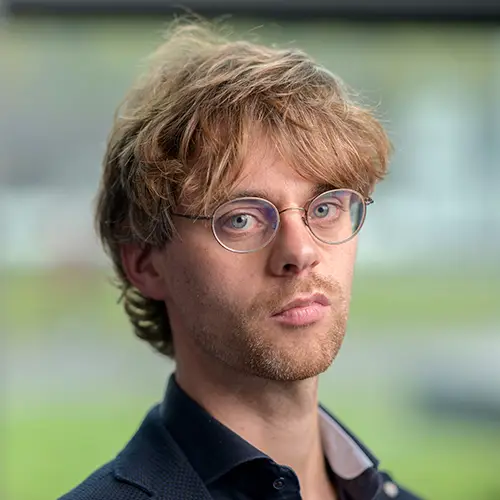
Massimo Sartori is a Full Professor and Head of the Chair of Neuromuscular Robotics at the University of Twente (The Netherlands), where he also directs the Neuromechanics and Neuromuscular Robotics Lab (NeuBotics Lab). His research focuses on understanding how human movement emerges from the interaction between the nervous and musculoskeletal systems in healthy and impaired individuals. He combines neural interfacing with real-time neuromusculoskeletal modelling and simulation to develop symbiotic robotic exoskeletons and bionic limbs aimed at restoring movement after neuromuscular injury. He has contributed to the co-development of widely used open-source musculoskeletal modelling platforms, including CEINMS-RT and MyoSuite, and has received multiple prestigious blue-sky grants from the EU’s premier funding agency the European Research Council. Prof. Sartori has developed patented technologies in wearable sensors, exoskeletons, and bionic legs in collaboration with industry partners such as OttoBock HealthCare, and received an official commendation from the Municipality of Affi (Italy). He currently co-chairs the IEEE RAS Technical Committee on BioRobotics and serves as Associate Editor of IEEE Transactions on Neural Systems and Rehabilitation Engineering. He earned his PhD in Information Engineering from the University of Padova (2011), held visiting positions at the University of Western Australia, Griffith University, and Stanford University, and conducted postdoctoral research at the University of Göttingen, where he became Junior Research Group Leader in 2015. He has been at the University of Twente since 2017.

A dedicated session to ask questions and hear directly from our presenters!

Speakers

Categories: