
This event has passed.
In-person IEEE Event at Bristol Robotics Laboratory
Delsys & Xsens Engineering User Group Meeting at Bristol, UK
Date & Time:
Venue
Bristol Robotics Laboratory
Address:
University of the West of England, T Block, Frenchay Campus, Coldharbour LaneBristol, BS16 1QY United Kingdom
Leveraging bio-signals namely EMG and kinematic data obtained from IMUs are frequently used in tandem to modulate locomotory movement in the HMI and Human Robotics based studies.
The intention of this user group is to explore the use case scenarios of the named technologies and how they have contributed to the advancement of Human Robotics.
Topics
- Combining bio-signals and kinematic data for movement analysis
- Multi-scale human movement measurement
- Expressive and intuitive human-robot communication
- Human augmentation in workplace settings
- Wearable robotics for rehabilitation
- Motion capture for teleoperation
- Prosthetics and assistive devices
Proposed Program
09:00-09:15 Registration
09:15-09:30 Greetings from Co-organizer Prof. Giacinto Barresi
09:30-10:00 Greeting from Delsys and Xsens
10:00-10:30 Lecture 1 Prof. Carlos Cifuentes
From Sensing to Assistance: Real-Time AI and Exoskeletons for Managing Upper-Limb Muscle Fatigue
Muscle fatigue is a key contributor to musculoskeletal disorders and reduced effectiveness of assistive technologies. This talk presents an integrated approach to detecting and mitigating upper-limb fatigue using wearable sensing, AI, and exoskeletons. First, we introduce a real-time system that estimates biceps fatigue using IMU sensors and LSTM regression, enabling continuous, non-invasive monitoring during dynamic tasks. We then present a study showing how a soft exoskeleton can reduce muscle activation and perceived workload in prosthesis users. Together, these works demonstrate a pathway toward closed-loop, fatigue-aware assistive systems that enhance performance, safety, and long-term user wellbeing.
Learn more about your speakers below.
10:30-11:00 Lecture 2 Prof. Kia Nazarpour
Multi‑Scale Motion Capture from Millimetres to Metres: Magnetomyography, Electromyography, Wearables, and Radar
This talk explores multi-length measurement of human movement, from millimetres to metres. Magnetomyography captures fine muscle mechanics, electromyography measures centimetre-scale activation patterns, and wearables and radar track whole-body motion. Integrating these scales enables richer, continuous understanding of function, rehabilitation, and behaviour across laboratory, clinic, and real-world environments.
Learn more about your speakers below.
11:00-11:30 Lecture 3 Ir. Tom Turcksin and Mr. Maxim Yudayev
How BruBotics advances human-centered technology for sustainable, efficient, and adaptive industrial environments.
Learn more about your speakers below.
11:30-12:00 Lecture 4 Dr. Emanuele Pulvirenti
To still boldly go, and stay: how sEMG shapes our understanding of soft exosuits for human augmentation and rehabilitation in Space and on Earth
Understanding and augmenting human movement across extreme and everyday environments requires both precise sensing and adaptive technologies. This talk presents how high-fidelity electromyography (EMG) enables the study and development of soft exosuits for human augmentation and rehabilitation in space and on Earth. We first show how EMG was used to characterise neuromuscular adaptations during walking in simulated hypogravity, demonstrating that a resistive soft exosuit can restore Earth-like muscle activation patterns. We then explore assistive exosuits integrated within analogue spacesuits, where EMG provides insight into human–robot interaction and guides designs that reduce physiological effort. Finally, we introduce ongoing work using EMG and inertial sensing within a federated learning framework to recognise in-home activities and deliver adaptive, personalised assistance. Together, this work highlights the central role of EMG in linking physiological understanding with intelligent control, enabling soft wearable systems that transition from measurement tools to real-world assistive technologies.
Learn more about your speakers below.
12:00-13:00 Lunch
13:00-13:30 Lecture 5 Prof. Liang He
Soft Robotics for rehabilitation and training
While the recent surge in computational power has enabled artificial agents to understand and respond to human inputs, the level of physical interaction between humans and these agents remains limited. Such deep physical interaction is considered essential for the development of an AI that truly understands human needs and provides assistance to enhance daily life. To bridge this gap, soft and wearable robots can serve as embodiments that facilitate physical communication between humans, AI, and the environment by leveraging their biocompatibility and biomimetic properties. In this talk, I will discuss research from the Oxford Healthcare Biorobotics Lab aimed at investigating how flexible, adaptive soft robotic devices, EMG-based controllers, and embodied haptics can enhance rehabilitation and training within neurological disorders and sports medicine settings.
Learn more about your speakers below.
13:30-14:00 Lecture 6 Dr. Mayumi Mohan
Meaning in Motion: Designing Understandable and Expressive Robot Gestures
Learn more about your speakers below.
14:00-15:00 Lab tour Prof. Giacinto Barresi
Learn more about your host below.
15:00-15:30 Break
15:30-16:45 Delsys and Xsens hands on workshop featuring Dr. Oluwarotimi Samuel
16:45-17:00 Closing
Speakers
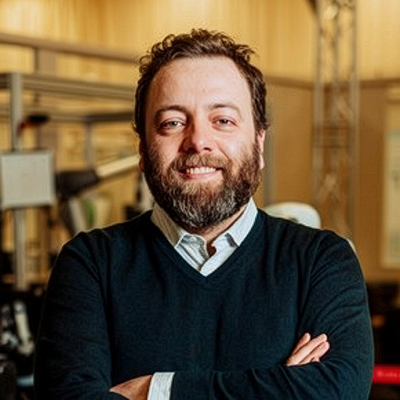
Prof. Carlos Cifuentes
Associate Professor at Bristol Robotics Laboratory, School of Engineering, CATE, University of the West of England
Prof. Carlos Cifuentes
Carlos Cifuentes is an Associate Professor of Human-Robot Interaction at the Bristol Robotics Laboratory (BRL), University of the West of England (UWE Bristol), UK. He is also the Deputy Director of the VIVO Hub, a £13.4M UK-funded research hub (2024-2030).
With over 15 years of experience, Carlos has spearheaded numerous projects focused on designing, developing, testing, and deploying robotic systems for rehabilitation, assistance, and empowerment. His collaborative work with healthcare professionals has explored the short- and long-term impacts of robotic technologies on various health conditions, including cardiac diseases, post-stroke recovery, spinal cord injuries, cerebral palsy, Parkinson's disease, age-related challenges, musculoskeletal disorders, and autism spectrum disorder (ASD).
Since 2021, he has been an Associate Editor for IEEE Robotics and Automation Magazine, and since 2023, he has served as an Associate Editor for both ICRA and IROS. With over 200 scientific publications, Carlos is widely regarded as a leader in human-robot interaction and healthcare robotics.
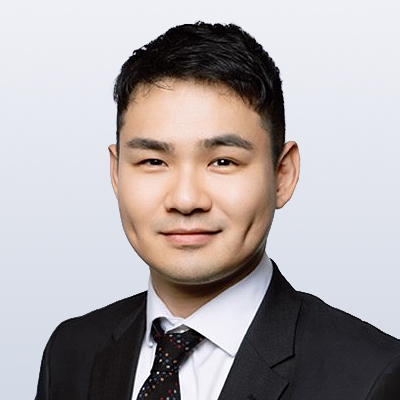
Prof. Liang He
Associate Professor with the Department of Engineering Science, University of Oxford and an Official Fellow at Kellogg College
Prof. Liang He
Liang He is an Associate Professor with the Department of Engineering Science, University of Oxford and an Official Fellow at Kellogg College. He received his PhD in Soft Robotics from Imperial College London and conducted postdoc research at the Oxford Robotics Institute with the Embodied Intelligence Program. Later, he joined the Oxford Institute of Biomedical Engineering to establish the Healthcare Biorobotics Lab (HBL). His research interests include soft robotics, wearable and assistive robotics, haptic and VR. The HBL lab aims to explore embodied-AI solutions to prevent injuries, assist rehabilitation, and enhance patientcare. He is also a core faculty member of the Podium institute for sports medicine and technologies, a long-term strategic partnership between the University of Oxford and NGO Podium Analytics.

Dr. Mayumi Mohan
Research Scientist at Haptic Intelligence Department, Max Planck Institute for Intelligent Systems
Dr. Mayumi Mohan
Mayumi Mohan is a Research Scientist at the Max Planck Institute for Intelligent Systems. She holds a PhD in Computer Science from the University of Tübingen. Her research focuses on teleoperation, minimally supervised robotic systems, and human-robot interaction. She is particularly interested in designing intuitive communication between humans and robots through non-verbal feedback, expressive robot behavior, and rigorous evaluation of robot interactions.
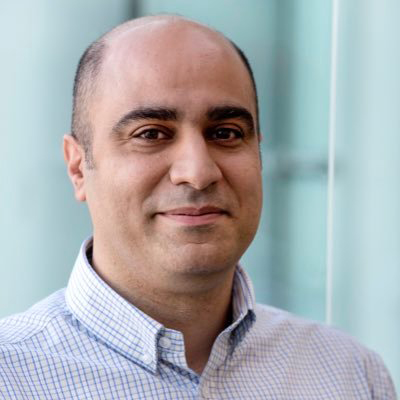
Prof. Kia Nazarpour
Professor of Digital Health at the University of Edinburgh and co-founder and Chief Strategy Officer at Neuranics
Prof. Kia Nazarpour
Kia Nazarpour is Professor of Digital Health at the University of Edinburgh and co-founder and Chief Strategy Officer at Neuranics. His work focuses on advanced sensing, wearable technologies, and AI for human movement, rehabilitation, and physiological monitoring. He develops ultra-sensitive magnetic and bioelectrical sensing systems spanning millimetre-scale muscle activity to metre-scale behaviour, translating deep-tech innovations into real-world healthcare, neurotechnology, and assistive solutions.
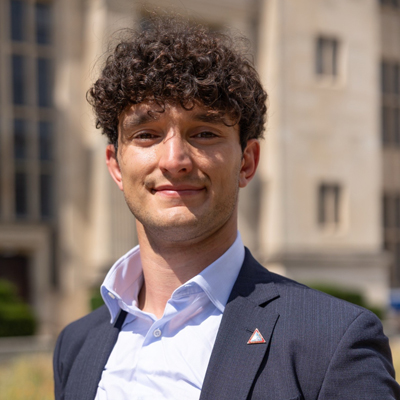
Dr. Emanuele Pulvirenti
Research Associate at Bristol Robotics Laboratory, University of Bristol
Dr. Emanuele Pulvirenti
Emanuele Pulvirenti is a Research Associate at the University of Bristol, working within the Soft Robotics Lab. He holds an MEng in Aerospace Engineering, an MSc in Robotics, and a PhD in Robotics and Autonomous Systems, all from the University of Bristol. His research focuses on preserving muscular and bone health in astronauts and terrestrial users through the use of soft exosuits and functional garments. Emanuele has collaborated with various industrial and academic partners, including Foster + Partners, the University of Milan, and the European Space Agency. He is currently exploring the integration of soft exosuits within future spacesuits, as well as the translation of this technology to revolutionise rehabilitation for patients, athletes, and individuals recovering from injury on Earth.
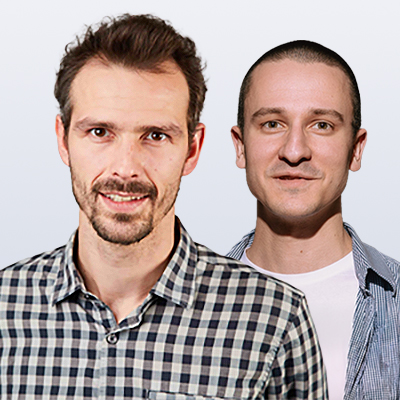
Ir. Ing. Tom Turcksin | Maxim Yudayev
Lab Manager at AugmentX Laboratory, BruBotics, VUB
PhD Researcher at KU Leuven
Ir. Ing. Tom Turcksin & Maxim Yudaev
Ir. Ing. Tom Turcksin is Lab Manager of the AugmentX Laboratory within the BruBotics research group, where he leads the evaluation of human-augmentation technologies such as exoskeletons, cobots, and VR/AR systems. His expertise includes biomechanics, physiological measurement, multi-sensor integration, and experimental setup design.
Maxim Yudayev is a PhD researcher at KU Leuven’s e-Media Research Lab, where he develops edge AI technologies for wearable healthcare applications. His work focuses on real-time multimodal physiological sensing and AI-based intent forecasting for exoskeletons and prostheses, with the goal of improving daily life for people with mobility impairments.
Co-organizer & Workshop Leaders
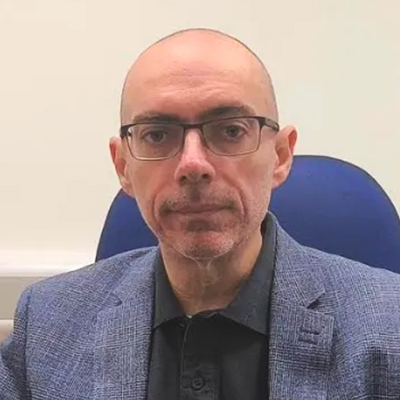
Giacinto Barresi
Professor at the Bristol Robotics Laboratory, School of Engineering, CATE, University of the West of England
Giacinto Barresi
Giacinto Barresi (PhD in robotics, MSc in psychology and neuroscience) is a Professor at the Bristol Robotics Laboratory, UWE Bristol (United Kingdom). He works on robotic-digital systems for biomedical (assistive, prosthetic, rehabilitative, surgical) applications. He is a member (internationalisation) of the Executive Committee of UK-RAS network for robotics and autonomous systems, a member of the Academic Committee of the RAS section in the IEEE UK & Ireland Chapter, the co-chair of the Technical Committee on Human Factors in Robotics at the International Ergonomics Association, the chair for Telehealth and Telemedicine in the IEEE-Telepresence initiative. He previously was a Researcher at the Istituto Italiano di Tecnologia (IIT) in Genoa (Italy). He also was a Scholar-In-Residence at the Indian Institute of Technology Gandhinagar (India), and a Guest Lecturer at the Kyushu University in Fukuoka (Japan). He currently is General Co-Chair of the IEEE Telepresence 2026 conference in Bristol.
Monique McLaughlin
Key Account Manager at Delsys Europe
Monique McLaughlin
With over 15 years of combined experience in both industry and academia, Monique has leveraged her role at Delsys Europe to integrate this expertise and advance in the specialised fields of Human-Machine Integration and Virtual and Extended Reality EMG applications.
She is committed to strengthening relationships across the European market, with a clear focus on delivering value and supporting the engineering community. Her mission is to provide robust, innovative, and gold-standard EMG tools and applications that meet the evolving research and development needs of this expanding field.

Dr. Oluwarotimi Samuel
Senior Lecturer and Lead of the Digital Rehabilitation and Immersive Technologies Research Group, University of Derby
Dr. Oluwarotimi Samuel
Dr. Oluwarotimi W. Samuel is a Senior Lecturer and Lead of the Digital Rehabilitation and Immersive Technologies Research Group at the University of Derby, UK. His research focuses on the design, development, and validation of intelligent systems, integrating machine learning and signal processing to advance applications in robotics, assistive technologies, diagnostics, and decision support systems.
Dr. Samuel earned his PhD in Pattern Recognition and Intelligent Systems from the University of Chinese Academy of Sciences (UCAS), Beijing, under the prestigious CAS-TWAS President’s Fellowship. Before joining the University of Derby, he served as an Associate Professor at the Shenzhen Institutes of Advanced Technology (SIAT), Chinese Academy of Sciences (CAS), and as an Adjunct Faculty Member at Dongguan University of Technology, China.
He has led multiple nationally and internationally funded research projects and published over 80 peer-reviewed articles, which have collectively attracted more than 4,850 citations. His contributions have earned him recognition among the Top 2% of Scientists Globally, as well as several distinctions, including IEEE Best Paper Awards, the IEEE Young Investigator Award, and a Merit Award for Youth Innovation Projects. His work was also nominated for the STEM for Britain Award, leading to the presentation of his research at the House of Commons before British Members of Parliament. In addition, he has contributed to global and national AI-driven agendas, including the United Nations STI4SDGs framework and the Nigeria’s National AI Strategy and Policy.
Dr. Samuel has held Visiting Research Fellowships at Sapienza University of Rome (Italy), SIAT-CAS (China), and INTI International University (Malaysia). Beyond his research, he is deeply committed to scientific collaboration and leadership. He is a Member of the Global Young Academy (GYA), an Associate Editor of Frontiers in Big Data, and an Advisory Board Member of the ELSP International Open Science Platform. He has also served as Chair, Co-Chair, and Technical Programme Committee Member for various IEEE international conferences, and as a Distinguished Speaker at events organised by the United Nations (UN) and the European Commission (EC).
Rosalie de Zeeuw
Product Specialist at Xsens
Rosalie de Zeeuw
Rosalie is a Product Specialist at Xsens, supporting applications in humanoid robotics, health, and ergonomics. With a background in Biomedical Engineering, she helps clients translate human motion into data-driven solutions for research and development.