Exercise selection is highly individual, and a rigid, one-size-fits-all approach can limit performance gains and increase injury risk.
EMG provides objective insight into which muscles are active, how strongly they contribute, and how patterns change across exercises — revealing what visual assessment alone cannot.
In practice, EMG metrics such as Peak Activation, Average Max Value, and Total Activation help identify the most effective exercises for specific training or rehabilitation goals and support data-driven return-to-play decisions.
Exercise selection — the process of choosing the right exercises to maximize training and rehabilitation outcomes — is a cornerstone of sports performance and rehab.
Different exercises place different demands on muscles, altering their relative contribution and activation levels. By understanding how exercises recruit specific muscles, practitioners can better target muscle specific neural adaptations to correct imbalances, enhance performance, and reduce injury risk that may lead to future injuries if left unattended.
Traditional recommendations for exercise can be useful as a point of general guidance, but the process of exercise selection is nuanced, and a one-size-fits-all approach may limit training and rehabilitation outcomes.
The selection process is complex; individual differences can play a large part in which exercises are safe and effective. This is often seen in athletes with past injuries who can present with muscle imbalances, inhibitions or movement compensation strategies. Poor exercise selection can exacerbate imbalances and potentially lead to further injury down the line.
Training history is yet another factor – experienced athletes may show better muscle recruitment patterns of the primary mover as opposed to those who are inexperienced and may rely more heavily on other synergistic muscle groups. During progressive overload, and when athletes push for maximal contraction, form can break down, and movement strategies can change. These changes may be subtle and invisible to the naked eye.
Embracing individual differences and tailoring exercise selection can be challenging. Without an understanding of how the muscles respond to exercise, practitioners may be missing the full picture. That’s why optimal exercise selection requires technology that unveils what is happening at the neuromuscular level.
Electromyography (EMG) is a tool that measures the electrical activity produced by muscles during movement, allowing us to identify which muscles are active, when they are active, and how strongly they contribute. In the context of exercise selection, EMG can empower practitioners by giving them the ability to see what is happening at the neuromuscular level.
Using EMG, practitioners can:
For athletes who have suffered Achilles Tendon ruptures, there may be many barriers to returning to play. Chief amongst them is the atrophy of the calf muscle itself, which is a common side-effect of rest and recovery. Furthermore, calf weakness may also be a risk factor for Achilles Tendon injuries. In both cases, the strength of the calf muscle has important implications from both injury prevention and rehabilitation perspectives, making it a key muscle group to address as a sports practitioner.
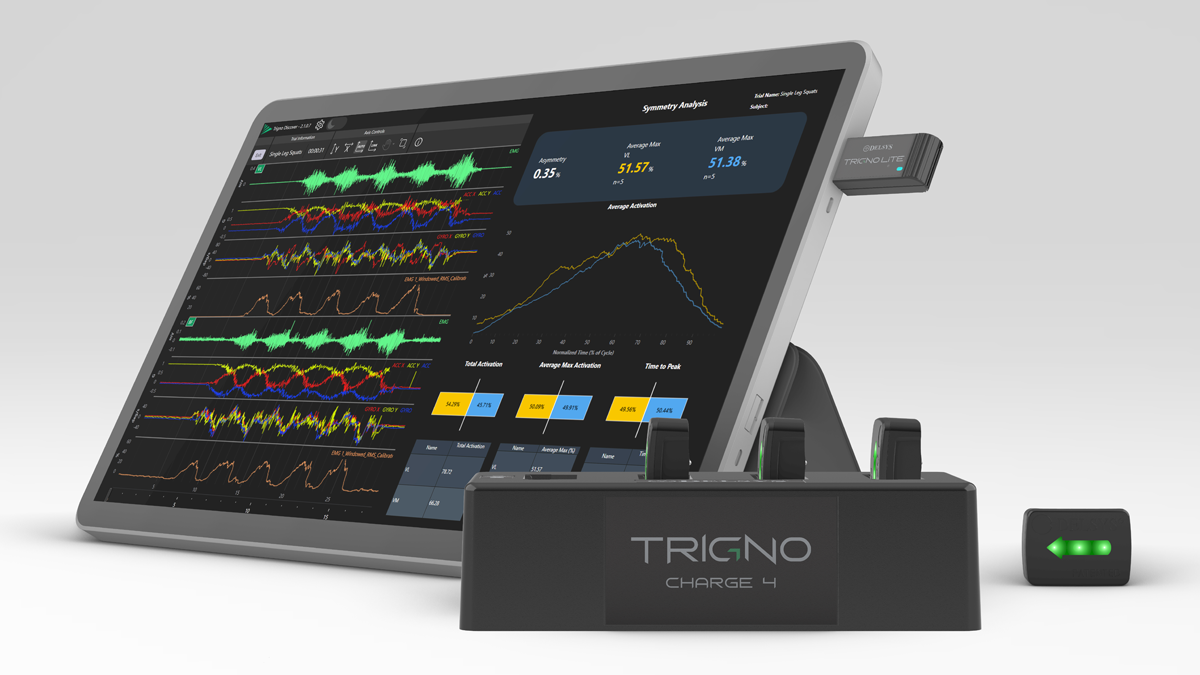
In this example, data was collected from a healthy subject (no past injury history affecting the calves). Three Trigno Avanti sensors were paired with a Trigno Lite receiver, and placed on:
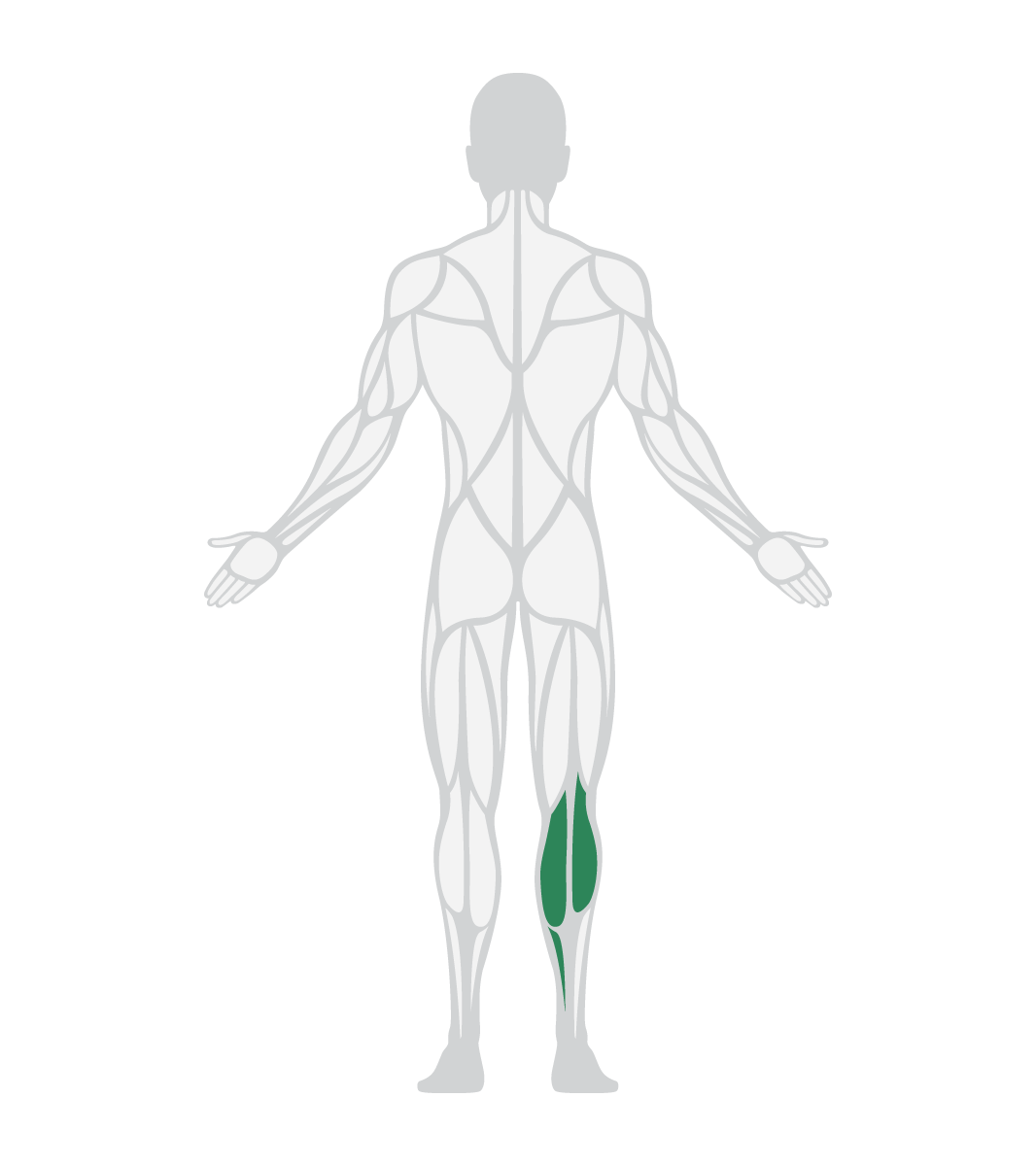
After placement, each sensor was normalised to a Maximum Voluntary Contraction (MVC). Normalisation is paramount when collecting surface EMG, to reduce the effect of the limitations of surface EMG, whilst providing a reference value to allow comparisons of amplitudes between muscles, athletes and sessions.
With the goal of examining muscle activity during different exercises and assessing the relative contribution of the muscles in each exercise, the athlete completed 10 reps of each exercise:
Using Trigno Analytics, the data was analyzed from the three exercises to examine the relative contribution of the different calf muscles and to track the activation levels of each muscle across the three exercises.
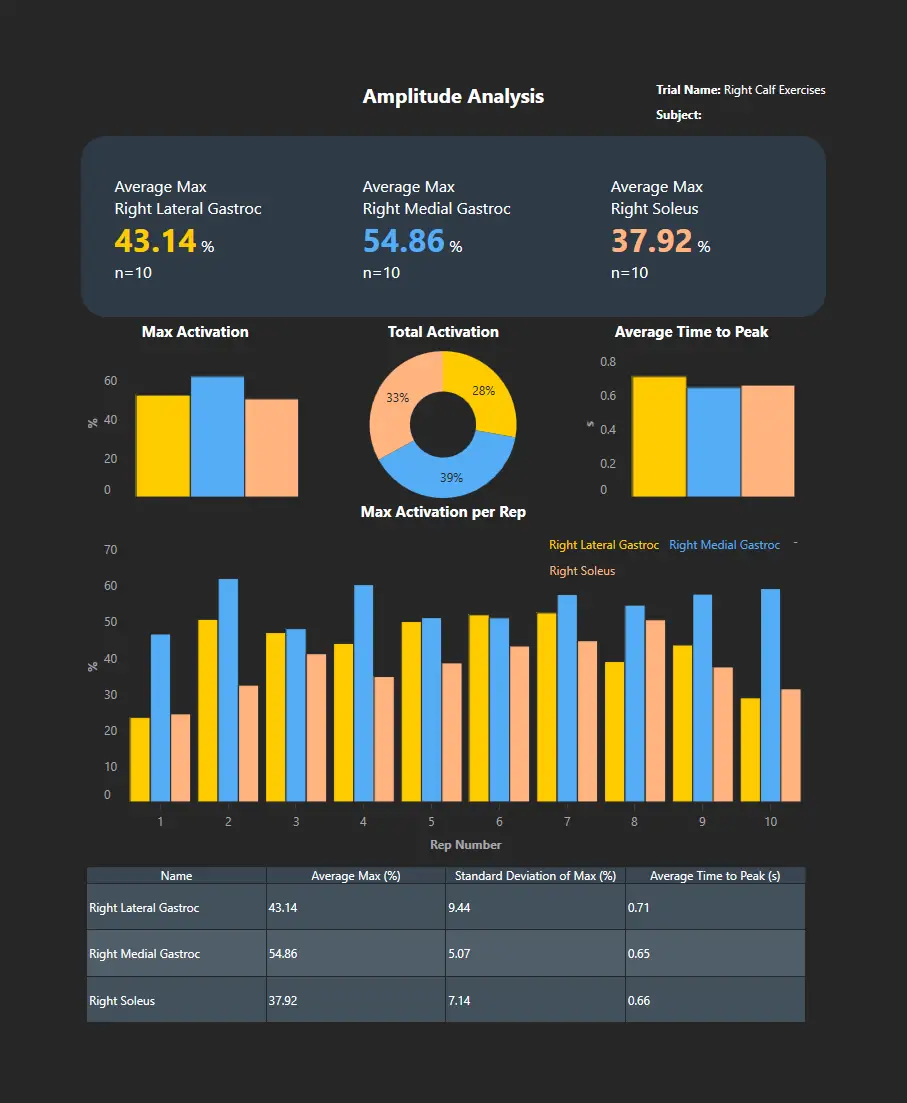
| Muscle | Max Activation (%MVC) | Average Max Value (%MVC) | Standard Deviation of Max (%) | Average Time to Peak (s) | Total Activation (%) |
|---|---|---|---|---|---|
| Right Lateral Gastroc | 52.50 | 43.14 | 9.44 | 0.71 | 27.80 |
| Right Medial Gastroc | 62.03 | 54.86 | 5.07 | 0.65 | 39.23 |
| Right Soleus | 50.58 | 37.92 | 7.14 | 0.66 | 32.97 |

| Muscle | Max Activation (%MVC) | Average Max Value (%MVC) | Standard Deviation of Max (%) | Average Time to Peak (s) | Total Activation (%) |
|---|---|---|---|---|---|
| Right Lateral Gastroc | 101.05 | 90.57 | 5.66 | 0.55 | 33.73 |
| Right Medial Gastroc | 91.32 | 82.16 | 6.67 | 0.58 | 46.63 |
| Right Soleus | 80.86 | 71.00 | 4.29 | 0.42 | 19.64 |
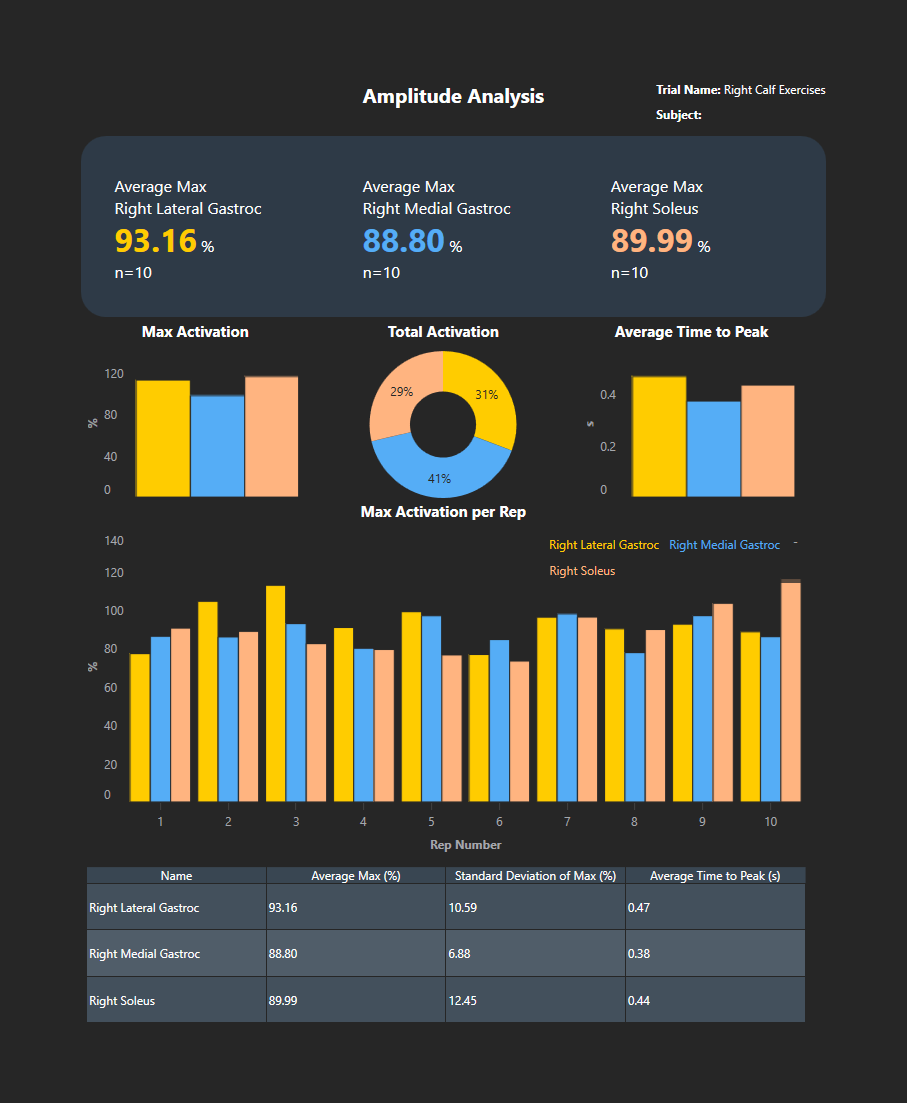
| Muscle | Max Activation (%MVC) | Average Max Value (%MVC) | Standard Deviation of Max (%) | Average Time to Peak (s) | Total Activation (%) |
|---|---|---|---|---|---|
| Right Lateral Gastroc | 113.17 | 93.16 | 10.59 | 0.47 | 30.77 |
| Right Medial Gastroc | 98.22 | 88.80 | 6.88 | 0.38 | 40.55 |
| Right Soleus | 116.69 | 89.99 | 12.45 | 0.44 | 28.68 |
Using the Trigno Analytics feature, reports were generated immediately after each exercise. Across the three calf tasks, muscle recruitment patterns shifted meaningfully depending on the movement. Pogo Jumps (Figure 3) produced the highest overall activation levels across muscles, reflected in both higher Max Activation (%MVC) and Average Max Value (%MVC). Meanwhile, Total Activation consistently highlighted the Right Medial Gastrocnemius as the dominant contributor across exercises, reinforcing its stabilizing role.
Peak and average metrics did not always tell the same story. For example, during Pogo Jumps, the Right Soleus reached the highest single burst of activity (MA), while the Right Lateral Gastrocnemius showed the highest typical rep activation (AMV). This distinction provides important insight into typical recruitment strategies versus high-demand or potentially fatigue-driven responses.
These findings raise several actionable considerations:
Using EMG data, Trigno Analytics reveals the complexity behind human movement. This is just an example of how EMG data can enrich the exercise selection process by providing practitioners with an in-depth understanding of how the muscles are working.
It is important to note that the findings from this example case may not generalize to athletes who have a history of Achilles Tendon injury, since movement patterns and muscle inhibition may be affected by the injury and resulting atrophy. However, the assessment protocol outlined in this example may prove a useful tool in classifying the athlete’s readiness for return to play.
For more information on using EMG for exercise selection in applied sports, please reach out to contact@delsyseurope.com.